Recent Post





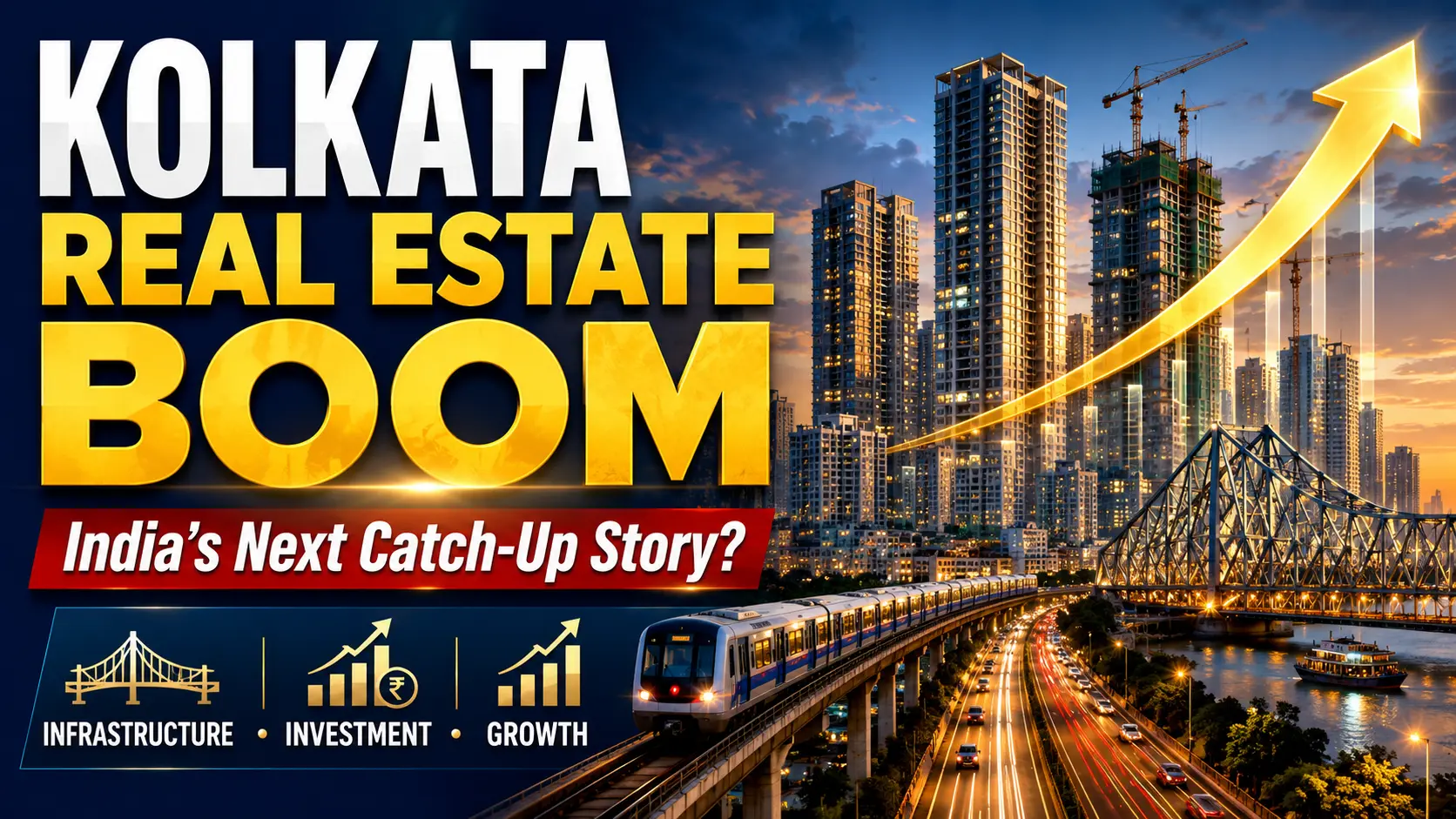
Kolkata Real Estate Growth: Why the City Could Become India’s Next Big Catch-Up Story
At Sugam Homes, we are witnessing a pivotal moment in Kolkata’s real estate journey. For years, the city’s property market carried immense potential, but much of it remained underutilized. Today, recent policy shifts, infrastructure focus, and renewed investor interest suggest that Kolkata may be entering a new era of growth.
A recent discussion by Mint on its Let’s Get REal segment captures this momentum well. The conversation highlights why experts are now calling Kolkata India’s next big “catch-up story.” You can watch the full Mint video here.
For homebuyers, investors, developers, and businesses, this change could reshape the future of Kolkata real estate in a meaningful way.
What Changed? The Catalyst Behind Kolkata’s Real Estate Growth
The excitement around Kolkata’s property market is not just speculation. It is rooted in tangible political, policy, and infrastructure shifts that could unlock long-term urban growth.
Political Alignment
For the first time in nearly thirty years, Kolkata has complete centre-state alignment. This can create a more unified push for investment, infrastructure, job creation, and real estate development across Greater Kolkata.
Such alignment can also help reduce delays and bring a sharper focus to large-scale urban transformation.
Proposed Abolition of the ULCA
The proposed removal of the Urban Land Ceiling Act (ULCA), a 27-year-old constraint, could become one of the biggest turning points for Kolkata real estate.
For years, fragmented land holdings made large-scale development difficult. With ULCA reforms, developers and institutions may finally be able to consolidate larger land parcels. This can support planned townships, integrated communities, commercial hubs, and future-ready residential projects.
10-Year Master Plan for Greater Kolkata
The government has promised a 10-year master plan to transform Greater Kolkata into a globally competitive urban region.
This master plan is expected to focus on new townships, industrial corridors, infrastructure growth, and planned urban expansion. If implemented well, it could help Kolkata move beyond isolated development and towards corridor-led growth.
Infrastructure Projects Moving Faster
Several stalled or slow-moving infrastructure projects are now seeing renewed momentum. These include the EM Bypass metro expansion, the Tajpur deep-sea port, and airport privatization.
Improved connectivity has a direct impact on real estate demand. As commute times reduce and new business hubs emerge, residential demand in connected micro-markets can rise steadily.
Focus on Ease of Doing Business
There is also a clear mandate to remove “local syndicate” interference and extortion at construction sites. This can improve the speed of doing business and create a cleaner, more transparent environment for developers, investors, and homebuyers.
For the real estate sector, speed and transparency are both key. Faster approvals, smoother execution, and lower operational friction can improve project delivery and buyer confidence.
How These Changes Are Helping Kolkata’s Property Market
These shifts are changing the way Kolkata grows, builds, and attracts investment. The city is moving towards a more structured real estate ecosystem.
From Plot-Based Growth to Corridor-Based Urban Scaling
Kolkata has traditionally seen fragmented, plot-based growth. That model often limits the scale and quality of urban development.
Now, the city appears to be moving towards corridor-based urban scaling. This is a major shift. Corridor-led growth allows residential, commercial, retail, transport, and social infrastructure to grow together.
This approach is necessary for modern integrated townships and larger lifestyle-led developments.
Unlocking Prime Land Parcels
Large land parcels in areas such as New Town, Rajarhat, and the EM Bypass are becoming increasingly relevant for large-scale institutional participation.
These locations already have strong real estate interest. With better policy support and infrastructure movement, they can attract more organised development and long-term investment.
The “Job Story” Cycle
Kolkata’s real estate growth is closely tied to job creation.
As infrastructure improves, the city becomes more attractive for Global Capability Centers (GCCs), technology companies, and large employers. The entry and expansion of companies like Accenture can create stronger employment opportunities, salary growth, and demand for quality housing.
This creates a positive cycle:
- Better infrastructure attracts businesses
- Businesses create jobs
- Jobs increase housing demand
- Housing demand supports real estate growth
This “job story” is one of the most important signals for Kolkata’s future property market.
Commenting on Kolkata’s evolving growth story, Mr Ashok Saraf, Chairman of Sugam Homes, said:
“Kolkata has always had the foundations of a strong economic centre—talent, connectivity, and enterprise. Today, with improving infrastructure, supportive policies, and rising investor confidence, the city is entering a new phase of sustainable growth. At Sugam Homes, we are committed to contributing to this transformation by creating developments that deliver lasting value for both the city and its communities.”
Kolkata Real Estate: SWOT Analysis
| Strengths | Weaknesses |
|---|---|
|
Affordability: Grade-A office space at around ₹60/sq. ft. compared to ₹200+ in other major metros.
Strong Talent Base: Kolkata has a large pool of Bengali engineers, software professionals, and skilled workers.
Established Infrastructure: The city already has metro connectivity, suburban rail networks, and strong urban fundamentals.
|
Historical Red-Tapism: Decades of slow approvals and fragmented land holdings have limited the city’s growth potential.
Brain Drain: Many young professionals have historically moved out of Kolkata for better job opportunities in other metros.
|
| Opportunities | Threats |
|---|---|
|
GCC Scaling: Kolkata has the potential to become a strong hub for high-end technology, offshore centres, and business services.
MSME Growth: Leather, jewellery, garments, and other MSME sectors can create employment and support housing demand.
Price Appreciation: Experts suggest that Kolkata property prices could double in the next 3–5 years if growth momentum continues.
|
Speculation: There is a risk of investors pushing prices up before job creation fully catches up.
Bureaucracy: New reforms could lose momentum if they get delayed by old administrative habits.
|
How Kolkata’s Growth Can Change the Business Landscape
The transformation of Kolkata real estate will not only affect homebuyers. It can redefine how business is done across East India.
One of the biggest expected changes is the removal of outdated land-holding constraints. Developers may no longer need to maintain hundreds of shell companies just to hold land. This can lead to higher institutional participation, cleaner land ownership structures, and more transparent real estate operations.
For investors and homebuyers, transparency builds confidence. For developers, it creates room for better planning, larger communities, and long-term value creation.
The Rise of Thematic Townships in Kolkata
As Kolkata grows, the city may see more thematic townships focused on specific industries and lifestyles. These could include tech-based hubs, GCC-focused communities, wellness-led developments, and integrated residential-commercial zones.
This kind of development can create a strong live-work-play ecosystem, similar to the growth models seen in Hyderabad and Bengaluru.
For Kolkata, this is especially meaningful. The city already offers a lower cost of living, strong cultural depth, quality education, and a high quality of life. With better jobs and infrastructure, it can attract professionals who once moved out in search of better opportunities.
This could support a powerful “reverse brain drain,” where Kolkata’s talent chooses to return home for global-standard careers.
What This Means for Homebuyers in Kolkata
For homebuyers, this phase could be one of the most meaningful windows in Kolkata’s real estate journey.
Better infrastructure, stronger employment opportunities, improved transparency, and planned township growth can make residential investment more attractive. Areas connected to business corridors, metro routes, and new urban hubs may see stronger demand in the coming years.
At the same time, Kolkata’s affordability remains one of its biggest advantages. Compared to other major metros, the city still offers better value for homebuyers looking for quality homes, larger spaces, and long-term appreciation.
Sugam Homes and Kolkata’s Next Chapter
Sugam Homes is proud to be part of this journey.
Kolkata’s real estate story is no longer only about catching up with other major Indian cities. It is about shaping a growth model that can remain inclusive, affordable, and aspirational while staying true to the city’s character. The city’s talent pool, land availability, cultural depth, improving infrastructure, and economic potential give it the foundation to become one of India’s most promising real estate growth stories.
This belief is reflected in Sugam Homes’ growing focus on Kolkata’s emerging development corridors, including Joka, the Dum Dum–Jessore Road northern corridor, the Salt Lake–New Town business corridor, Mahishbathan in the eastern growth belt, Konnagar on the Hooghly-side suburban corridor, and Kamalgazi in South Kolkata.Together, these locations show how the city is expanding in multiple directions, supported by better connectivity, rising residential demand, stronger business activity, and the need for well-planned urban spaces.
Through residential and commercial developments across these locations, Sugam Homes aims to contribute to Kolkata’s wider transformation while creating spaces that support modern lifestyles, business growth, community living, and long-term value. This vision is reflected in projects such as Urban Lakes in Konnagar, which offers thoughtfully designed homes in a well-connected location. For homebuyers seeking a flat near Konnagar station, the project combines accessibility, modern amenities, and a serene living environment, making it well-positioned to meet the aspirations of today’s urban families.
Policy reforms, infrastructure projects, and job creation are beginning to move in the same direction, as a leading real estate company in Kolkata, Sugam Homes, remains focused on the momentum to enter the growth phase it has long deserved. Homebuyers and investors are not simply looking at property anymore; they are looking at the opportunity to be part of a city that is preparing for its next chapter.
FAQs on Kolkata Real Estate Growth
Why is Kolkata being called India’s next big catch-up story?
Kolkata is being called India’s next big catch-up story because the city is seeing renewed focus on infrastructure, policy reforms, land consolidation, business growth, and job creation. These factors can help unlock long-pending real estate potential across Greater Kolkata.
How can ULCA reforms impact Kolkata real estate?
The proposed removal of the Urban Land Ceiling Act can help consolidate larger land parcels. This may allow developers and institutions to create bigger townships, integrated communities, business hubs, and planned residential projects.
Which areas may benefit from Kolkata’s real estate growth?
Areas such as New Town, Rajarhat, EM Bypass, Joka, and other infrastructure-linked corridors may benefit from improved connectivity, large land availability, business activity, and rising housing demand.
Why is job creation important for Kolkata’s property market?
Job creation drives housing demand. When companies, GCCs, and tech firms expand in a city, more professionals need quality homes near workplaces. This supports residential demand, rental demand, and long-term property appreciation.
Is Kolkata still affordable compared to other metro cities?
Yes, Kolkata remains more affordable than many other major Indian metros. This affordability, combined with improving infrastructure and business growth, makes the city attractive for both end-users and long-term investors.

Jeet Sanyal
Experienced real estate business strategist guiding home buyers with industry insights to enable risk free capital decisions.
- Jeet Sanyal#molongui-disabled-link

- Jeet Sanyal#molongui-disabled-link

- Jeet Sanyal#molongui-disabled-link

- Jeet Sanyal#molongui-disabled-link