Recent Post


What Is UDS in Real Estate? A Complete Guide to Undivided Share of Land
When you buy a flat, you pay for more than the rooms inside your four walls. You also buy a small share of the land the building stands on. That share is called UDS, and it is one of the most important numbers in your property papers that most buyers never ask about.
Your UDS affects your legal ownership, your resale value and what you receive if the building is ever redeveloped. This guide explains what UDS means, how it is calculated, and what to check before you sign.
UDS Full Form in Real Estate
The UDS full form in real estate is Undivided Share of Land. The term is used the same way in construction, so the UDS full form in construction is also Undivided Share of Land.
In simple terms, UDS means your proportionate ownership share in the land on which an apartment project is built. When you buy a flat, a part of the project’s land is legally linked to your apartment, and that part is your UDS in the apartment.
What Is UDS? UDS Meaning Explained Simply
It is the portion of the total project land that belongs to you as a flat owner.
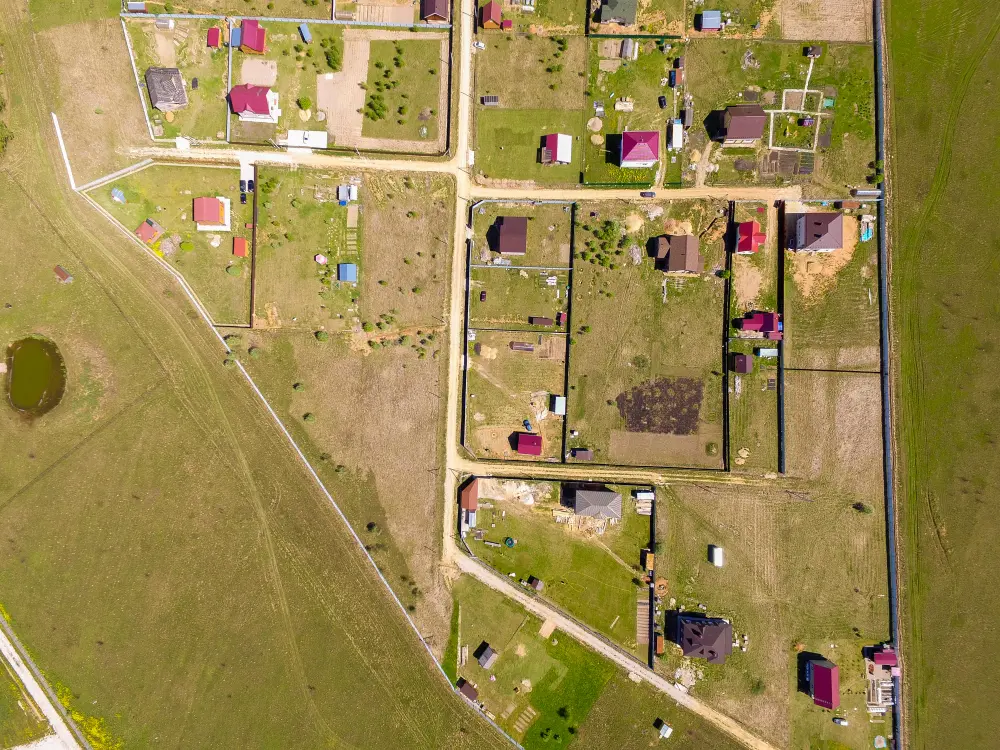
The word “undivided” is the key. Your share is not a marked-off plot you can fence or build on. Instead, every flat owner jointly owns the entire land, and each person’s ownership is expressed as a proportion of the whole.
Think of it like a pizza that has not been sliced. Everyone owns a fixed fraction of it, but no one owns a specific slice.
In Kolkata sale deeds, UDS usually appears as a line saying the flat is sold together with an undivided proportionate share in the land. That clause is your legal proof of land ownership.
What Is UDS in Apartment Projects?
In an apartment, you own two things:
- The flat itself, which is the built structure you live in.
- The UDS, which is your share of the land under and around the building.
Over time, buildings age and lose value, but land in a good location usually appreciates. That is why UDS is often described as the part of your property that holds long-term value.
UDS vs Carpet Area vs Built-Up Area vs Super Built-Up Area
These terms are often confused. Here is how they differ:
| Term | What it measures | What it tells you |
| Carpet area | Usable floor area inside your flat’s walls | How much space you actually live in |
| Built-up area | Carpet area plus wall thickness and balconies | The physical size of your flat |
| Super built-up area | Built-up area plus your share of common areas like lobbies, lifts and stairs | The saleable area most developers quote |
| UDS | Your share of the project’s land | How much land you legally own |
Carpet, built-up and super built-up areas are about built space. UDS is about land.
Also Read: What Is a Land Record? How to Check the Land Records? Complete Guide
UDS Calculation Formula
The most widely used UDS calculation formula is:
UDS = (Your flat’s area ÷ Total area of all flats in the project) × Total land area
Developers may use built-up area or super built-up area for “flat’s area”. What matters is that the same measure is used for your flat and for the project total.
You can also express UDS as a percentage:
UDS % = (Your flat’s area ÷ Total area of all flats) × 100
How to Calculate UDS for Flats: Step-by-Step Example
Here is how to calculate UDS for flats using Kolkata land measurements (1 kattah = 720 sq. ft.).
Project details:
- Total land area: 40 kattah = 28,800 sq. ft.
- Total super built-up area of all flats: 1,20,000 sq. ft.
- Your flat’s super built-up area: 1,200 sq. ft.
Step 1: Find your share of the total flat area. 1,200 ÷ 1,20,000 = 0.01 (or 1%)
Step 2: Multiply by the total land area. 0.01 × 28,800 = 288 sq. ft.
Your UDS = 288 sq. ft. You own 1% of the project land, which works out to 288 sq. ft., even though it is not physically marked.
Why two similar flats can have different UDS
Now imagine the same 1,200 sq. ft. flat in a lower-density project built on 60 kattah (43,200 sq. ft.) with the same total flat area of 1,20,000 sq. ft.
0.01 × 43,200 = 432 sq. ft. UDS
Same flat size, 50% more land. This is why UDS calculation is a useful way to compare projects that look identical on paper.
How Project Density Affects UDS
UDS depends on how much is built on a piece of land. The more floors and flats on the same plot, the smaller each owner’s share of land.
| Project type | Typical UDS per flat |
| Low-rise building or villa community | Higher |
| Mid-rise apartment complex | Moderate |
| High-rise tower with many units | Lower |
A lower UDS is not automatically bad. High-rise projects often offer better views, amenities and locations. But it is worth knowing what you are trading off.
Why UDS Matters for Homebuyers and Investors
1. It proves your land ownership
Your UDS is the legal record that you own part of the land, not just the structure. It should be clearly mentioned in your sale agreement and sale deed.
2. It supports long-term value
Buildings depreciate while land in prime locations tends to appreciate. A healthy UDS adds to your property’s long-term worth.
3. It matters in redevelopment
If an older building is redeveloped decades later, owners’ rights and compensation are often linked to their share of the land. A larger UDS can mean stronger bargaining power.
4. It moves with the flat
When you sell your apartment, your UDS transfers to the buyer automatically. It cannot be sold separately from the flat.
5. It affects inheritance and disputes
As part of your estate, UDS must be recorded clearly to avoid confusion when the property passes to heirs or if a legal dispute arises.
UDS Checklist Before You Buy a Flat
Before you sign any agreement, check these points:
- Ask for the UDS figure. Request your exact UDS in sq. ft. or as a percentage of total land.
- Check the sale deed and agreement. Make sure the undivided proportionate share of land is clearly stated.
- Confirm the total land area. Match it with the RERA registration details and approved plans.
- Understand which area was used. Ask whether UDS was calculated on built-up or super built-up area.
- Watch for future phases. In phased projects, ask whether additional towers will be built on the same land, as this can change how land is shared.
- Compare projects. Two flats at similar prices can carry very different land shares.
If anything is unclear, have a property lawyer review the documents before registration.
Common Misconceptions About UDS
“UDS means I own a specific piece of land.” No. You own a proportion of the whole land, not a marked-off plot.
“UDS is the same as super built-up area.” No. Super built-up area measures built space. UDS measures land.
“Higher UDS always means a better buy.” Not always. Location, construction quality, amenities and developer track record matter just as much.
Buy With Clarity, Build With Trust
UDS is the land you will never walk on but will always own. Asking about it is one of the simplest ways to protect your investment.
As a real estate company in Kolkata with more than three decades of delivered homes, Sugam Homes believes buyers deserve clear documents and straight answers. Every ongoing project is RERA registered, and our team is happy to walk you through land area, approvals and your share of land before you book. It is part of why families count Sugam among the top real estate builders in Kolkata.
Explore Sugam projects or send us an enquiry to get started.
Frequently Asked Questions
1. What is the UDS full form in real estate?
The UDS full form in real estate is Undivided Share of Land. It is the proportionate share of the project’s land that belongs to each apartment owner.
2. What is UDS in apartment ownership?
UDS in an apartment is your legal share of the land on which the building stands. It is jointly owned with other flat owners and is not physically divided.
3. How do you calculate UDS for flats?
Use the formula: UDS = (Your flat’s area ÷ Total area of all flats) × Total land area. For example, a 1,200 sq. ft. flat in a project with 1,20,000 sq. ft. of flats on 28,800 sq. ft. of land has a UDS of 288 sq. ft.
4. Is UDS mentioned in the sale deed?
It should be. In Kolkata, sale deeds typically state that the flat is sold together with an undivided proportionate share in the land. Always check this before registration.
5. Does a higher UDS increase property value?
Generally, yes. A higher UDS means more land ownership, which can support resale value and redevelopment benefits. But location and project quality matter too.

Sugam Homes
- Sugam Homes#molongui-disabled-link

- Sugam Homes#molongui-disabled-link

- Sugam Homes#molongui-disabled-link

- Sugam Homes#molongui-disabled-link